
HVAC digitization: from Digital Twins to Predictive Maintenance
The HVAC sector is undergoing an unprecedented digital transformation. Among the most innovative technologies is the Digital Twin: a virtual replica of a physical plant that allows real-time monitoring, simulation, and optimization of performance. This solution is not just a technological trend, but a strategic lever for reducing costs, increasing quality and efficiency, and improving sustainability. In a world focused on decarbonization and reducing consumption, the digital twin represents a decisive step towards intelligent plant management.
What is a Digital Twin and why is it important?
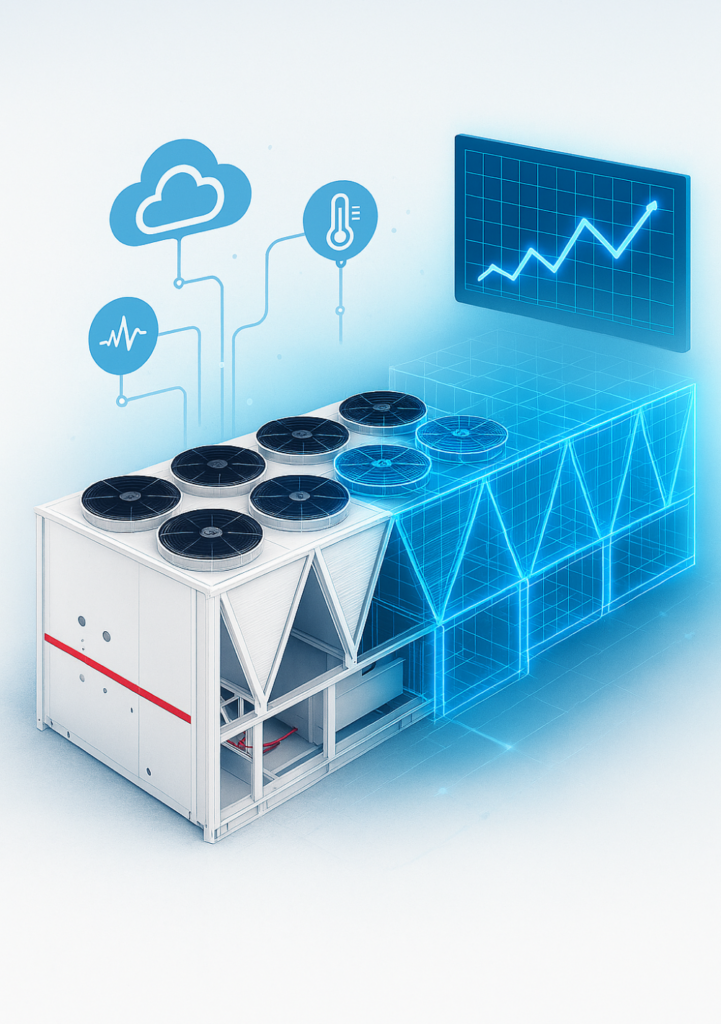
A digital twin is a virtual model that faithfully reproduces the behavior of a real HVAC system. Thanks to data from sensors, machine learning algorithms, and cloud platforms, the digital twin allows you to:
- Monitor operating conditions in real time.
- Simulate usage and stress scenarios.
- Predict failures and anomalies before they occur.
This approach allows you to move from reactive to predictive maintenance, reducing downtime and intervention costs. In a context where energy efficiency and operational continuity are priorities, the digital twin becomes an indispensable ally.
Benefits for Manufacturers, Installers, and End Users
The advantages are tangible and involve all players in the supply chain:
- Manufacturers: They improve product design thanks to real usage data, accelerating innovation and reducing development times.
- Installers: They plan targeted interventions, reducing maintenance times and costs and offering a more proactive service. They create integrated building/process/machine systems to ensure energy consumption optimization and improved performance forecasts.
- End Users: They enjoy greater reliability, comfort, and energy savings, with systems that always operate under optimal conditions.
A practical example? An HVAC system equipped with a digital twin can signal in advance the need to replace a component, avoiding sudden failures and optimizing the system’s useful life. This means fewer interruptions and greater efficiency, especially in industrial applications (processes) or in data centers where downtime has a significant economic impact.
What we are doing at MEHITS
A few months ago, we acquired AMESIM, a 1D simulation platform that allows us to create physical models of complex systems with a high degree of detail. It is widely used in sectors such as HVAC, automotive, aerospace, and energy to analyze the dynamic behavior of systems and components. One of its main features is that it allows different domains (thermal, hydraulic, pneumatic, electrical, mechanical) to be integrated into a single model and includes libraries of standard components (pumps, compressors, heat exchangers, valves, etc.).
We recently digitized a propane air/water heat pump and a stand-alone air conditioner from the HPAC BU to study their transients and thermodynamic behavior under variable conditions. We are currently working on enabling the digital twin to communicate directly with the machine controller in order to verify the control logic and subsequently integrate it with the rest of the system, i.e., the plant (simulated real loads) and the external environment (weather conditions). All this will allow us to optimize our units from both a thermodynamic and control point of view, increasing their reliability and efficiency. Unfortunately, it’s not all plain sailing, because the work is laborious and complex, requiring specific skills and many laboratory tests to calibrate the model.
Future prospects: Augmented Reality and AI
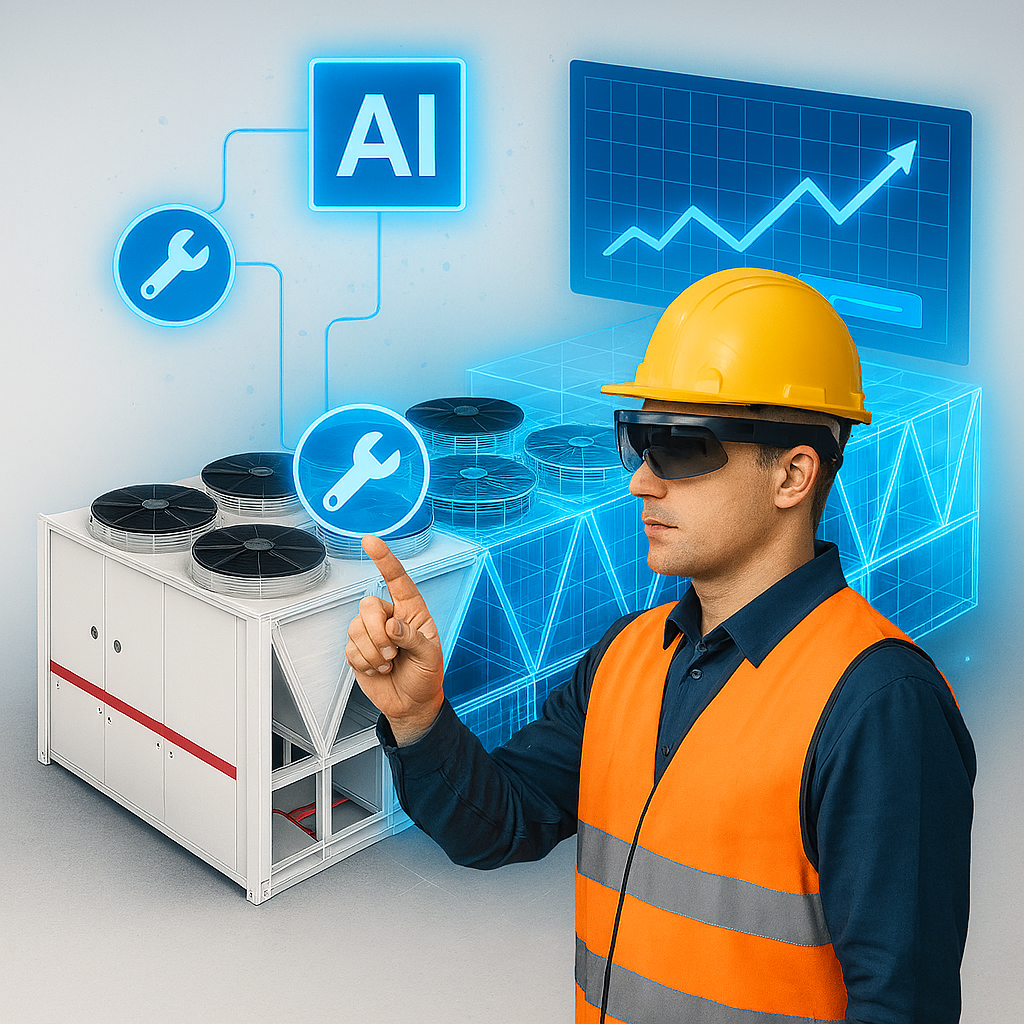
The future of digital twins is closely linked to artificial intelligence and augmented reality. Imagine a technician wearing AR glasses and viewing the digital twin of the installed system, with real-time maintenance instructions. This integration is not science fiction: it is the next frontier of HVAC, where digitization meets field operations.
Conclusion
The digital twin is not only an innovative technology, but a pillar of digital transformation in the HVAC sector. Those who adopt it today will be ready to lead tomorrow’s market, with more efficient, sustainable, and smart systems. In a world focused on reducing emissions and intelligent energy management, the digital twin is the key to a greener and more competitive future.