
We discovered from a newspaper article that we had a famous astronomer among us. We therefore asked him to tell us more about this passion of his, see his story below. If you also have some passion that you want to share, write to us and let us know, we will be happy to publish it!
My passion began when I was more or less 14 years old, one Christmas, probably in 1982, when I received a small 318-page manual entitled “Astronomy”. The captions were practically drawings and the only photos with a certain detail were those of Mercury (photo Mariner 10 probe, 1974-1975) Mars (photo Mariner 9 probe, 1971), Venus (photo of the ultraviolet clouds of the Mariner 10 probe, 1974 ) and Jupiter with its 4 Galilean (or Medici) satellites, the result of photos from the Paioneer 10 probes and above all detailed photos from Voyager 1 and Voyager 2 from 1979. For the rest, drawings and some color photos of some nebulae. I drank the book in a couple of days, I think, and from this little gift what is now my greatest passion was born.
A family friend lent me binoculars and with the help of a map of the sky with all the stars within a year I learned to recognize all the constellations. On the map I joined the stars of the individual constellations to form lines with recognizable shapes. I still have the map. Then came the moment my father bought me my first telescope, the legendary Konus 114/900. 114 is the diameter of the mirror and 900 is the focal length, all in mm. It was an all-purpose instrument, but I dedicated myself exclusively to the observation of Planets and the Moon.
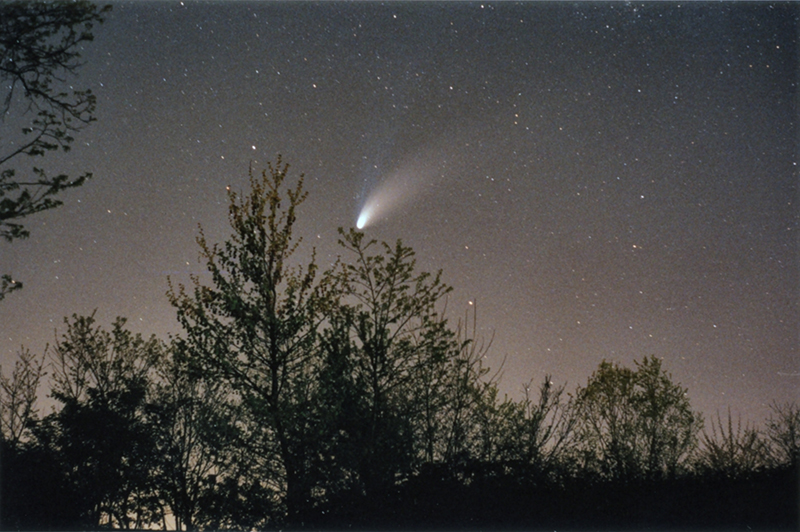
Then the leap to astrophotography with my father’s camera, a Pentax K-1000, for which I had to buy a motor to attach to the mount to counterbalance the rotation of the Earth, otherwise the photos would move! Furthermore, at the time there were still rolls of 24 or 36 photos, so the photographer had to wait a long time for the development… The results? Well… rather modest and now even laughable.
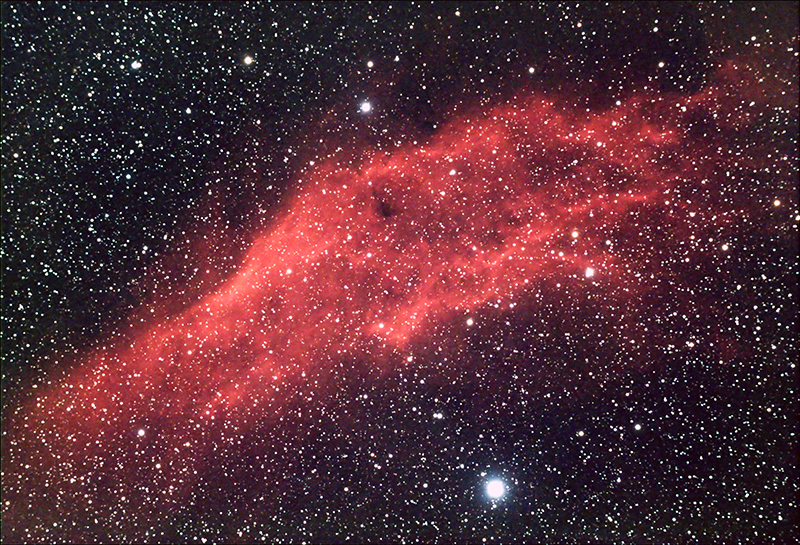
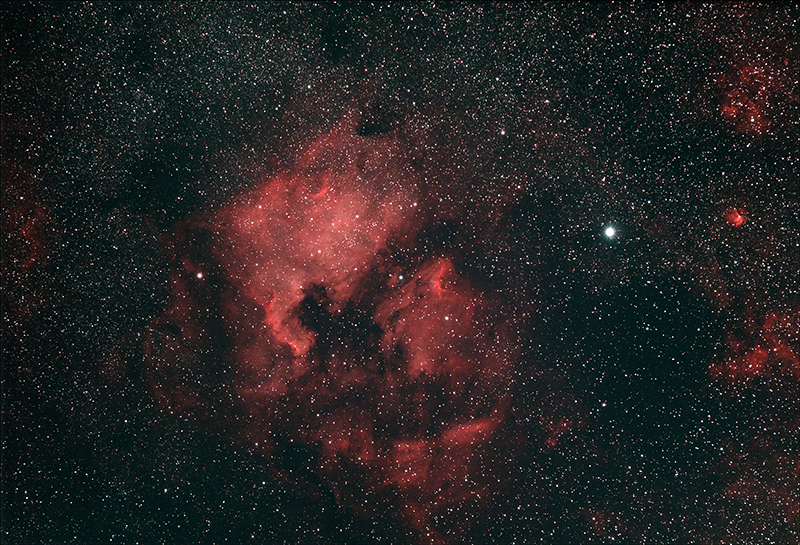
Then came the years in which I moved and I no longer had an acceptable observation site and this marked a setback of about ten years, until 2011. But already in 2010 something was awakening In me! The digital era in the astrophotographic field had just been born: webcam sensors were adapted to telescopes for filming planets. Intrigued, I tried it too and disassembled my Logitech webcam. It worked! I began to take photos of the Moon, obtaining them from the processing of webcam videos, initially lasting a few seconds, with a few hundred frames… but the die was cast and everything was so stimulating that I purchased a much more demanding telescope, a Schmidt-Cassegrain, with a 203 mm mirror and 2000 mm focal length and a computerized mount with which the pointing of objects in the sky is automatic, and an astronomical digital camera.
The photos resulting from this particular processing technique, with adequate instrumentation, are truly very detailed, stuff that makes the individual film photos taken by the 5 meter diameter telescope on Mount Palomar pale in comparison! The difference is made by the number of frames processed, several thousand versus one, and the post-production processing that enhances the details of the shots.
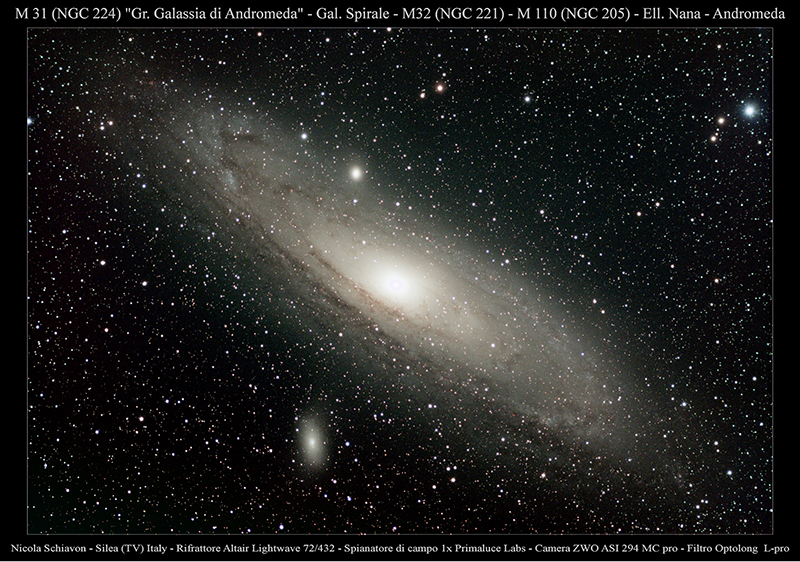
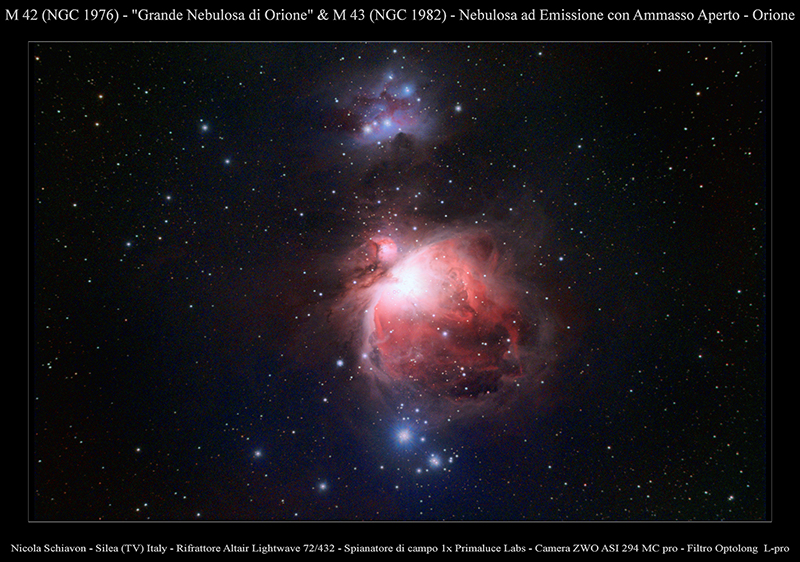
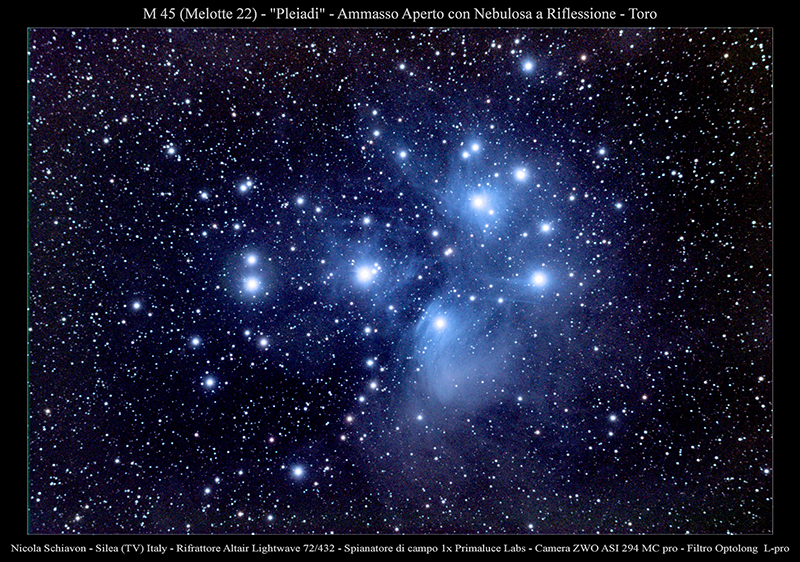
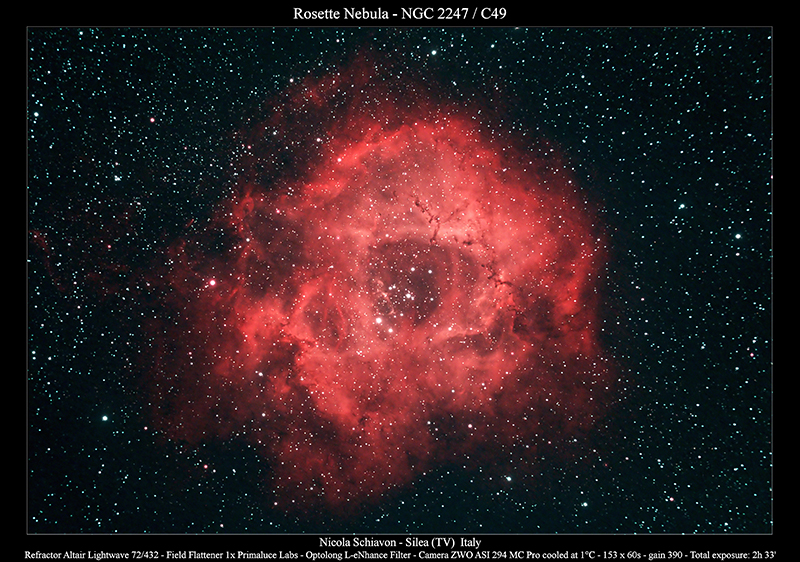
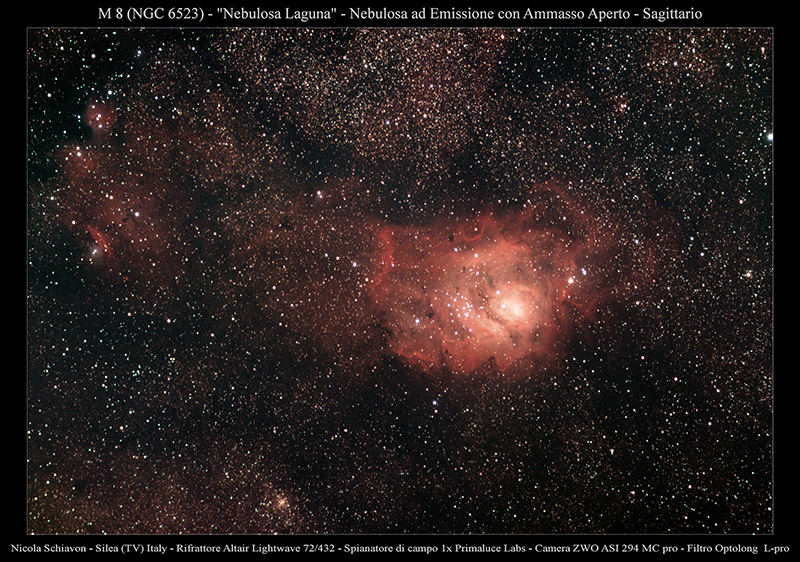
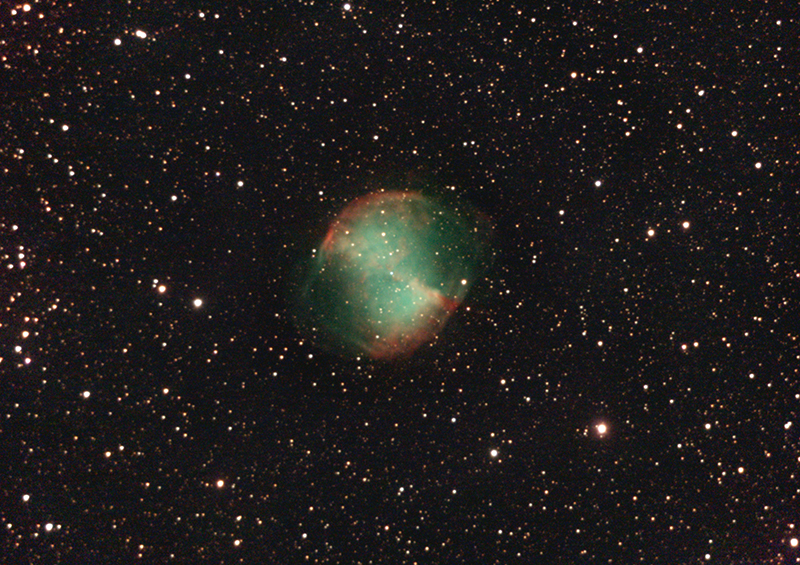
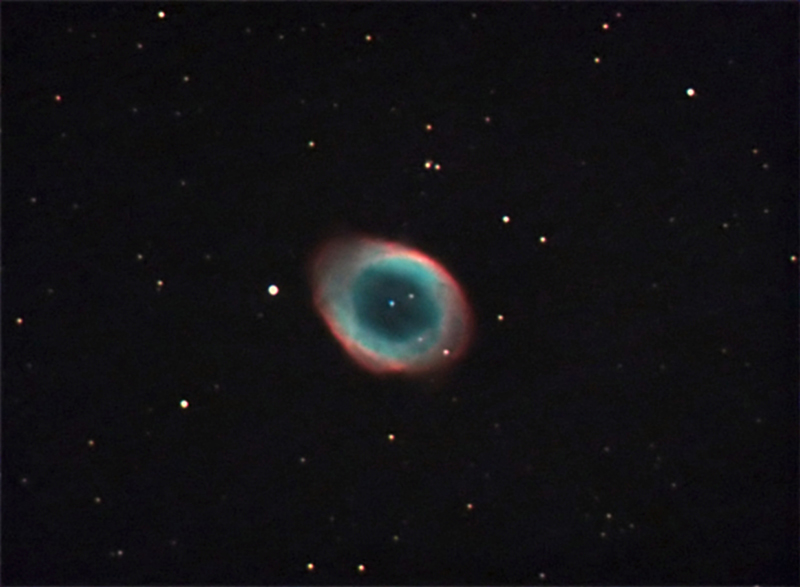
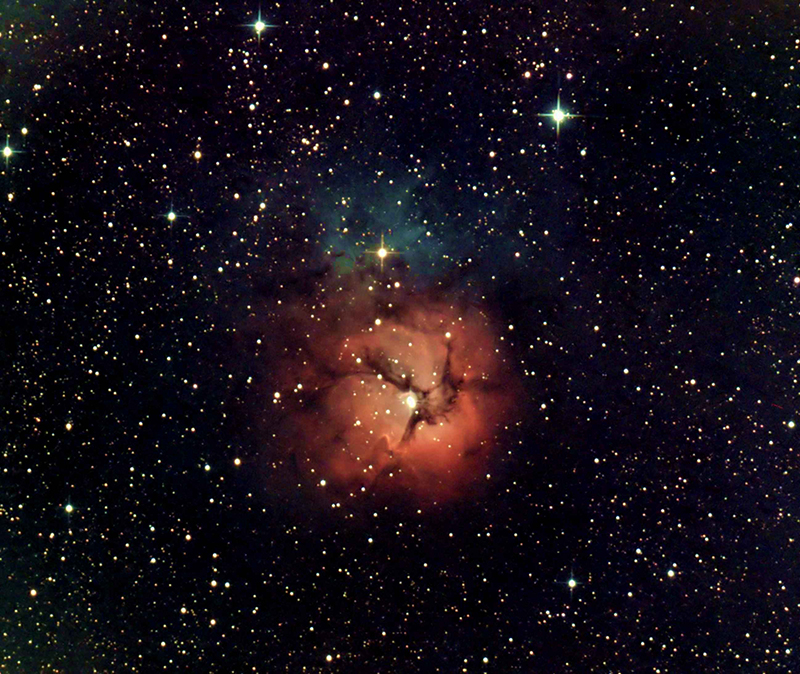
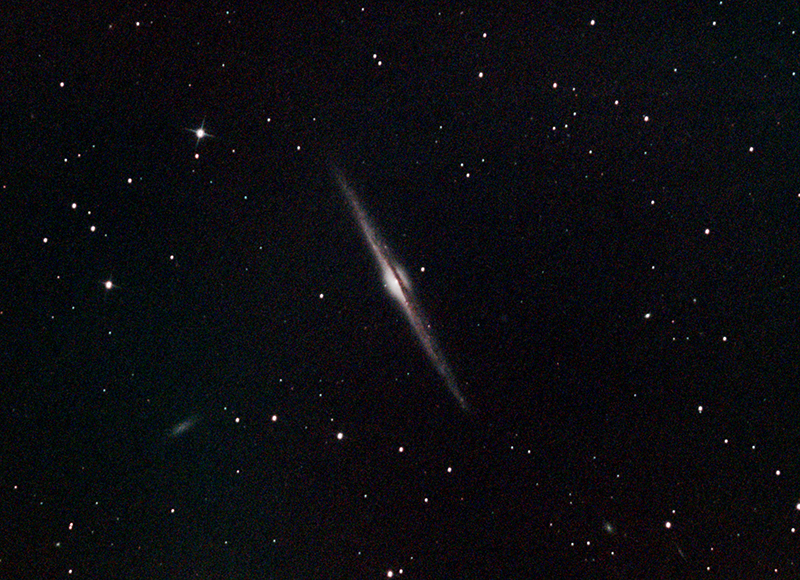
I produced a video accompanied by a soundtrack and captions, with the photos I took of the 110 deep sky objects from Messier’s famous catalogue, only for enthusiasts like me because it lasts 16 minutes, but I really like it anyway! Here is the link if you want to watch it:
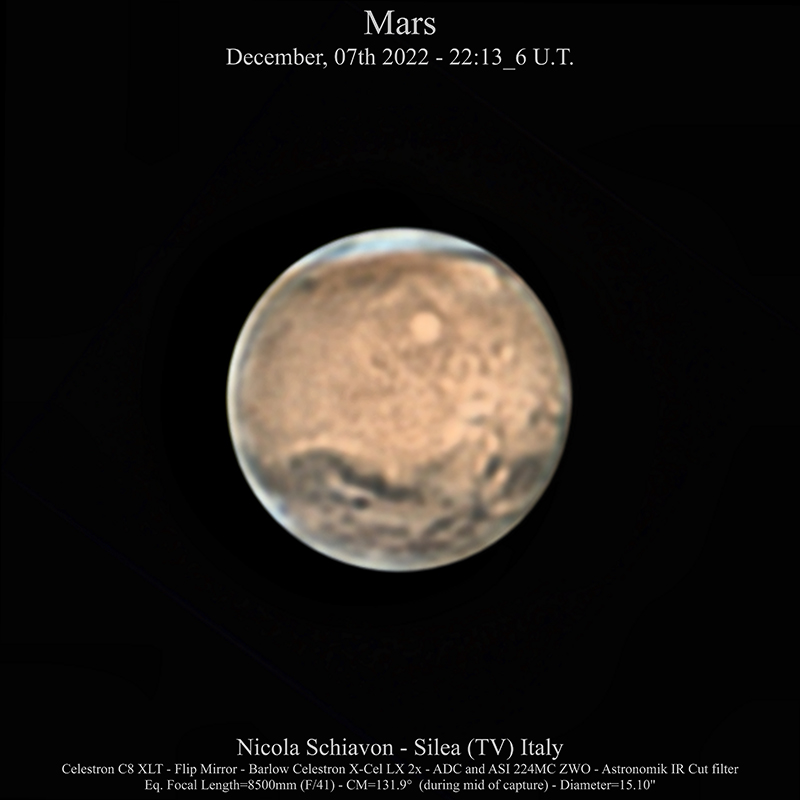
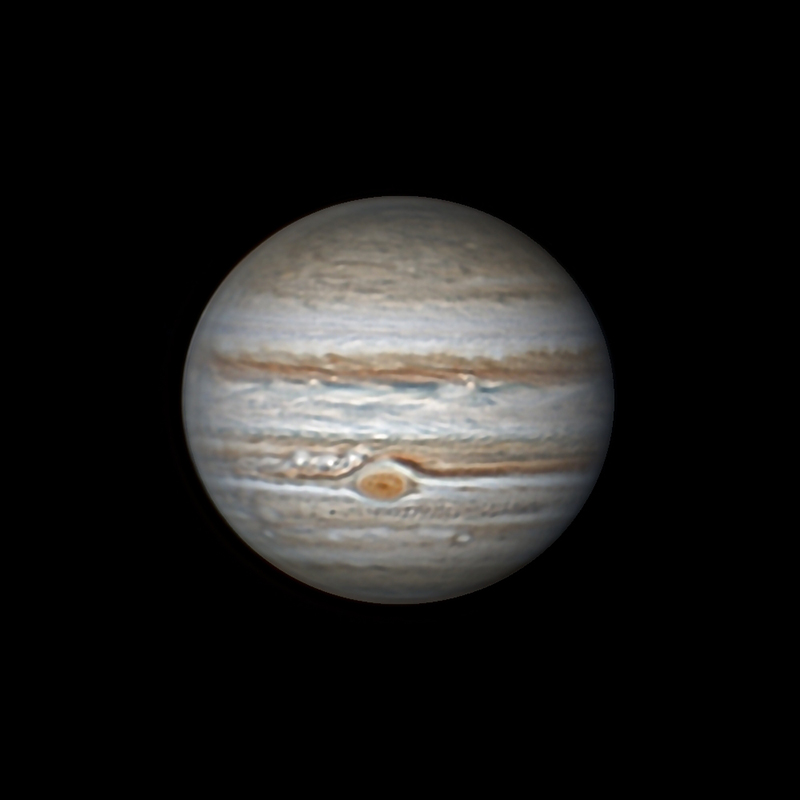
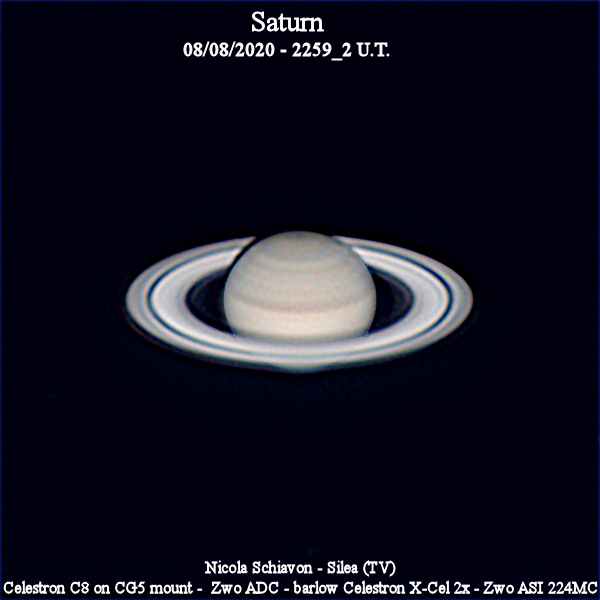
0 Comments